How to Search for Your Ancestors in Poland: A Beginner’s Guide
Published September 10, 2025 | 3 min read
How to Search for Your Ancestors in Poland: A Beginner’s Guide
Researching family history in Poland is a fascinating journey into the past, but it can be tricky without knowing where to start. Poland’s turbulent history—partitions, wars, and border changes—means records are scattered across different regions, archives, and sometimes even countries. Luckily, with the right tools and a bit of detective work, you can uncover your family story.
1. Start With What You Know
Before diving into Polish archives, gather as much information as possible from family sources:
- Names, including Polish spellings and possible variations.
- Places of birth, marriage, or death.
- Religion (Roman Catholic, Greek Catholic, Jewish, Protestant, Orthodox).
- Approximate dates (even a decade helps).
Family photos, letters, or stories can often contain hidden clues.
2. Understand the Historical Context
Poland didn’t exist as an independent state between 1795–1918. Depending on the time period, records might be in:
- Polish (especially after independence).
- Russian (in the eastern territories).
- German (in western and northern lands).
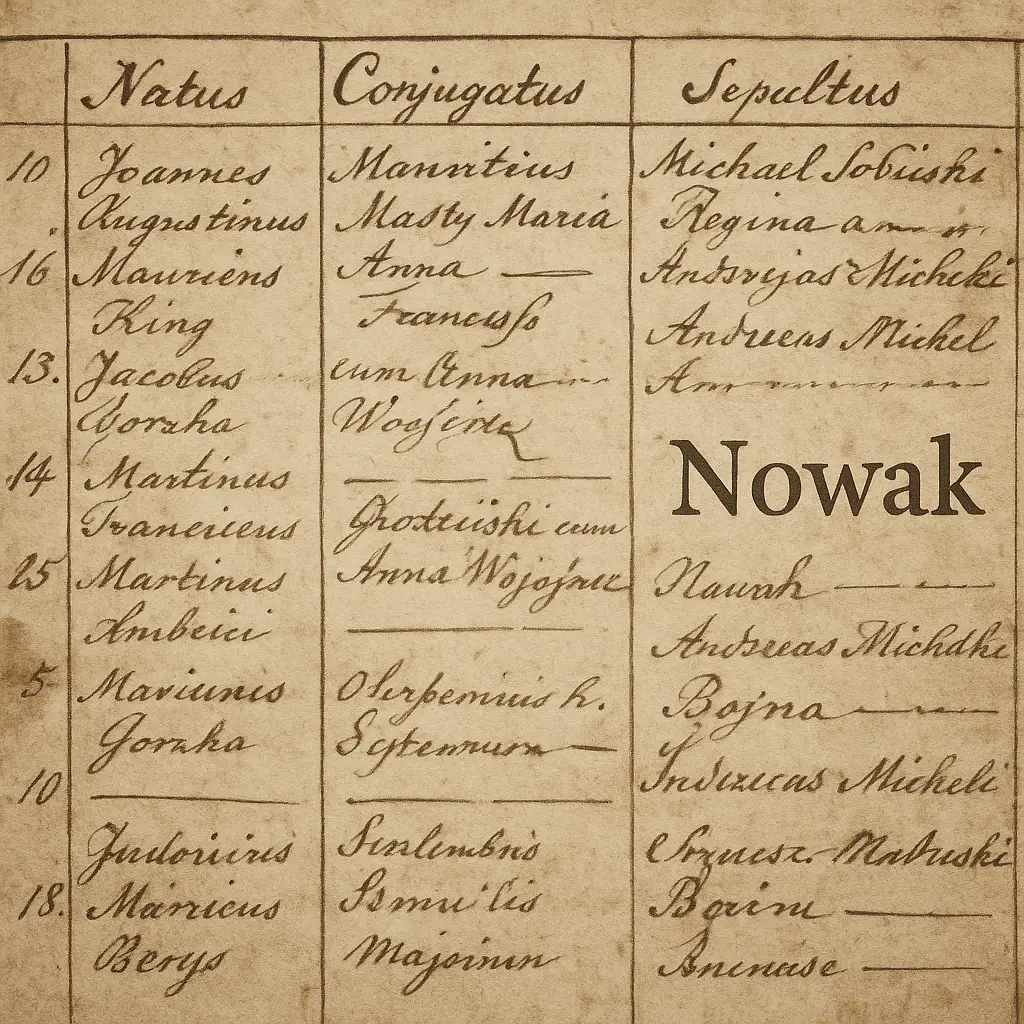
- Latin (in Catholic parish registers).
Knowing who controlled the region at the time helps you guess the language and archive location.
3. Parish and Civil Records
Most Polish genealogical research begins with church and civil registers:
- Parish Records: Baptisms, marriages, burials. Kept by Catholic, Protestant, Orthodox, and Jewish congregations.
- Civil Records: Introduced in different years depending on the partition. From 1808, the Duchy of Warsaw used the Napoleonic Code, creating civil registries of births, marriages, and deaths.
These records are typically stored in State Archives (Archiwa Państwowe), Diocesan Archives, or still at local parishes.
4. Key Online Resources
Several digital projects make Polish records more accessible:
- Geneteka: A free index of parish and civil records across Poland.
- Szukaj w Archiwach: Poland’s State Archives digital portal with millions of scans.
- FamilySearch: Free global genealogy platform with Polish parish and civil records.
- Jewish Records Indexing (JRI-Poland): Essential for Jewish ancestry.
These databases don’t cover everything, but they’re a great starting point.
5. Regional Archives
If records aren’t online, you may need to contact or visit a local archive. Poland has 33 State Archives across the country. Each keeps documents from its region, including parish registers, civil registries, census-like lists, and notarial records.
6. Challenges You Might Face
- Spelling Variations: Names often changed when families emigrated.
- Destroyed Records: Wars, fires, and neglect have left gaps.
- Handwriting & Language: Old cursive, Latin, Russian, or German can be tough to read.
Genealogists often learn to recognize common Latin phrases (e.g., natus est = "was born") or use online handwriting guides.
7. Hiring Professional Help
If you hit a wall, consider reaching out to a professional genealogist in Poland. They can access restricted archives, translate documents, and interpret historical details.
8. Connecting With the Past
Finding your Polish ancestors isn’t just about collecting names and dates. It’s about rediscovering stories, places, and traditions that shaped your family. Whether your relatives came from a small Mazovian village or the bustling streets of Kraków, the search connects you to a living history.
Final Thoughts
Genealogy in Poland can be complex, but the effort is rewarding. With online tools, archival research, and perhaps a bit of help, you can trace your family back through generations and understand the world they lived in.
Exploring Polish ancestry is like solving a historical puzzle—piece by piece, your family story emerges.